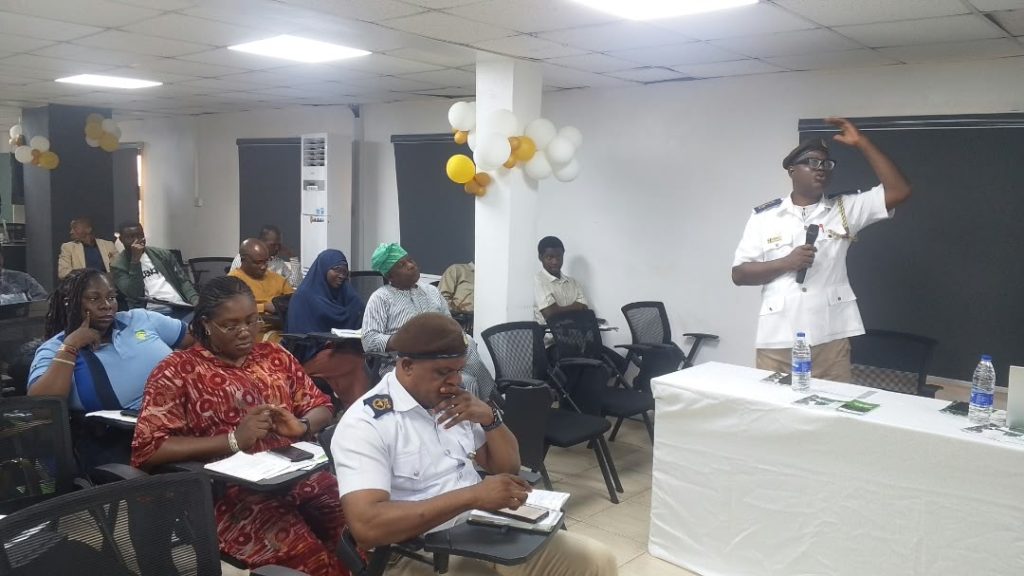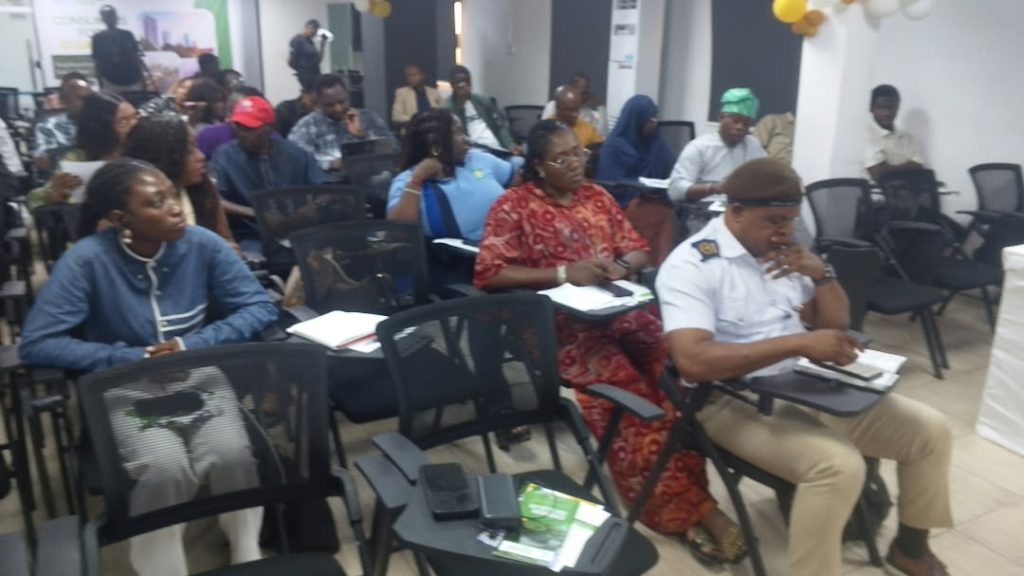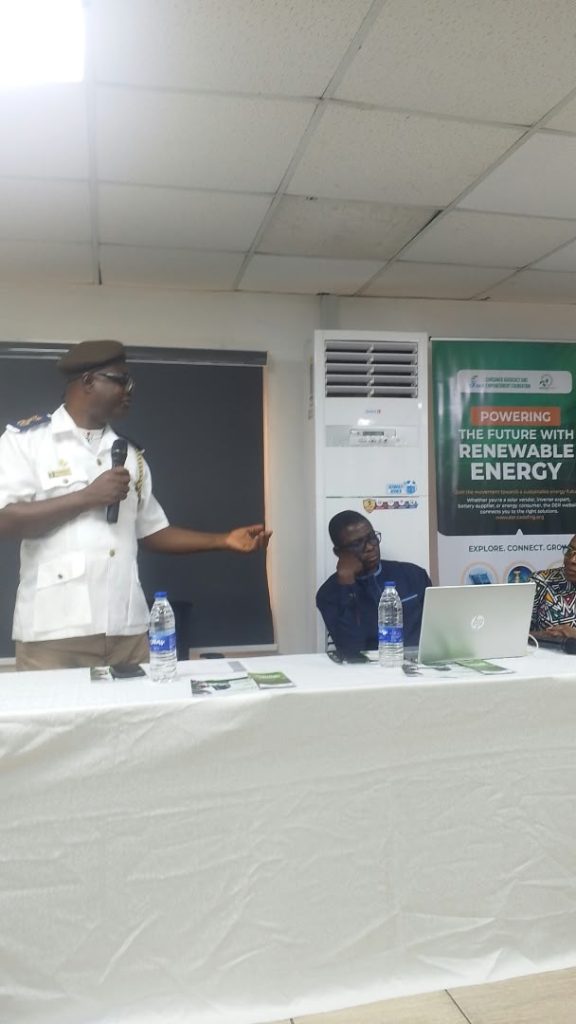
Lagos, Nigeria – The State President of the Environmental Health Officers Association of Nigeria (EHOAN), Lagos State, San. Dr. Akinyele Cyril Babasope, PhD, was among the distinguished guest speakers invited by the Consumer Advocacy and Empowerment Foundation (CADEF) to its Neighbourhood Power Protocol (NPP) Stakeholder Engagement.
In a formal invitation signed on behalf of CADEF, Dr. Akinyele was specifically requested to share his expertise at the engagement, which brought together key stakeholders in environment, energy and public health in Lagos State.
Other participants who graced the occasion included the Lagos State Environmental Protection Agency (LASEPA), the Lagos State Ministry of Environment, the Lagos State Electricity authorities, the Ministry of Energy (which also presented a Guest Speaker), and many other dignitaries from the environmental and energy sectors.
Although Dr. Akinyele, who is the Servant Leader of Environmental Health practice in Lagos State, was primarily listed as the Leading Speaker of the Day, he was ably represented at the engagement by a high-powered delegation of EHOAN Lagos.
The delegation was led by the Chairman, Education and Research Committee of EHOAN Lagos, San. Dr. Marcus Olorunwa, who delivered the paper on behalf of the State President. He was accompanied by the State Secretary, San. Arole Adeshola, and the Public Relations Officer of EHOAN Lagos, San. Azeez Lawal.
The Lecture Delivered
Dr. Olorunwa delivered a lecture titled: “Air Quality and Public Health: The Environmental Health Perspective”, drawn from the presentation prepared under the leadership of Dr. Akinyele.
The paper established that air quality is a critical public health issue because air is essential to life, but the quality of the air we breathe directly influences human health, wellbeing and quality of life. Everyone is exposed, at home, at work, in businesses and in public spaces, and exposure can be continuous with health effects that can be immediate or long-term.
What Are We Measuring?
- PM2.5 – Fine Particulate Matter, which penetrates deep into the respiratory system and is strongly linked to respiratory and cardiovascular risks
- PM10 – Coarse Particulate Matter, associated with road dust, construction and combustion
- NO2 – Nitrogen Dioxide, from vehicle traffic and generators
- SO2 – Sulphur Dioxide, from combustion of sulphur-containing fuels
- CO – Carbon Monoxide, from incomplete combustion
- O3 – Ground-Level Ozone
Where Does Air Pollution Come From?
- TRANSPORT – Vehicle exhaust, traffic congestion and road dust
- POWER GENERATION – Diesel and petrol generators, poor combustion and maintenance
- HOUSEHOLD & OTHER COMBUSTION – Cooking with polluting fuels and indoor combustion
- INDUSTRY & COMMERCE – Manufacturing, fuel-burning equipment, workshops and construction
- WASTE & OPEN BURNING – Burning of household waste and plastics
Lagos: What Does the Existing Evidence Tell Us?
- 68 µg/m³ estimated annual average PM2.5 concentration used in the World Bank’s Lagos assessment
- ∼11,200 estimated premature deaths attributable to ambient PM2.5 pollution in Lagos in 2018
- US$2.1 billion estimated health-related economic losses associated with ambient air pollution in Lagos in 2018
- 2.1% of Lagos State GDP represented by those losses
On spatial variation, particularly high PM2.5 concentrations were recorded in Ikorodu — 97 µg/m³, Shomolu — 85 µg/m³, Mushin — 71 µg/m³, Oshodi — 60 µg/m³, against a Lagos State average of approximately 47 µg/m³.
A more recent Lagos study covering six sites found site means ranging from 29.5 µg/m³ (lowest) to 96.6 µg/m³ (highest, at an industrial location near steel manufacturing and waste-processing activities), based on 656 valid gravimetric samples.
What Does the Data Mean for Health?
The lecture stressed the need to consider CONCENTRATION, DURATION, FREQUENCY, LOCATION and VULNERABILITY. WHO notes that PM2.5 can penetrate deep into the lungs and enter the bloodstream. Higher-risk groups include children, older adults, people with existing respiratory/cardiovascular conditions, and highly exposed workers.
How Should We Interpret the Measurements?
1. MEASURE, 2. COMPARE, 3. INTERPRET, 4. PRIORITISE, and 5. ACT.
On the regulatory context, the paper cited Nigeria’s National Environmental (Air Quality Control) Regulations, S.I. No. 88 of 2021 (Amended), while distinguishing between the NIGERIAN STANDARD, the WHO AQGs, and the MEASURED VALUE.
WHO 2021 Air Quality Guidelines reference levels:
- PM2.5: 5 µg/m³ annual, 15 µg/m³ short-term (24 h)
- PM10: 15 µg/m³ annual, 45 µg/m³ short-term (24 h)
- NO2: 10 µg/m³ annual, 25 µg/m³ short-term (24 h)
Air Quality Requires Shared Action
Businesses to control emissions; Regulators to set standards, monitor and enforce; Communities to report concerns; Environmental Health Professionals to assess exposure, interpret risks and advise; Health Professionals to recognise environmental contributions to disease; Researchers to generate reliable evidence; and Government to coordinate policy, infrastructure and investment.
A Practical Environmental Health Framework of MEASURE → IDENTIFY → ASSESS → CONTROL → MONITOR → IMPROVE was presented.
Conclusion
CLEAN AIR IS A SHARED RESPONSIBILITY. Source control is central to prevention.
It closed with the charge: MEASURE. UNDERSTAND. ACT. MONITOR. – Dr. Olorunwa Marcus (delivered on behalf of San. Dr. Akinyele Cyril Babasope, PhD, State President, EHOAN Lagos).
The engagement ended with participants commending EHOAN Lagos for its consistent leadership in environmental health advocacy in the state.
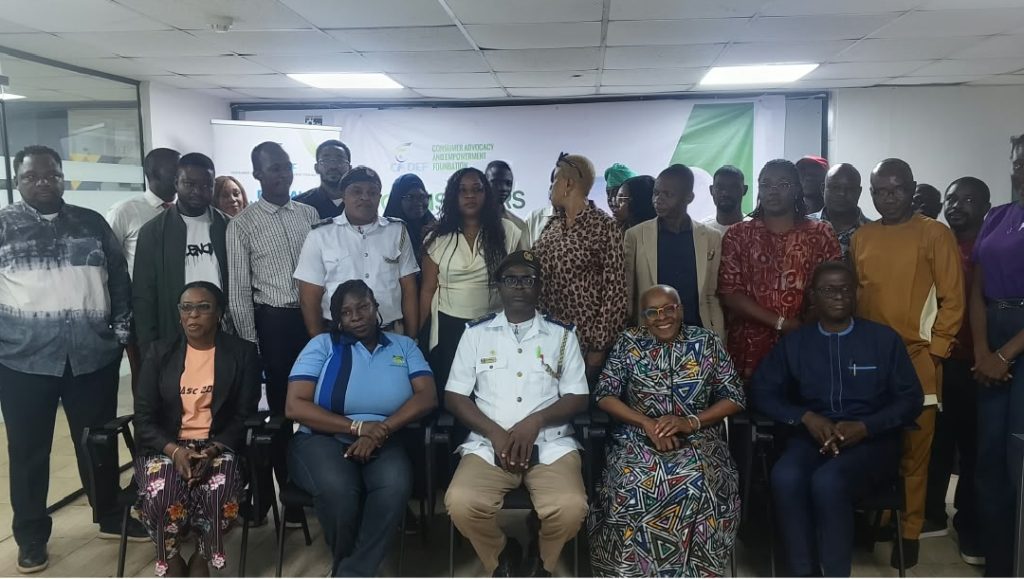
The program concluded with group photographs of all dignitaries and participants, followed by an appreciation message by the organisers, the Consumer Advocacy and Empowerment Foundation (CADEF), thanking all guest speakers, stakeholders, and the EHOAN Lagos delegation for their contributions to the success of the Neighbourhood Power Protocol (NPP) Stakeholder Engagement.
Reporting: LAGOS EHOAN MEDIA